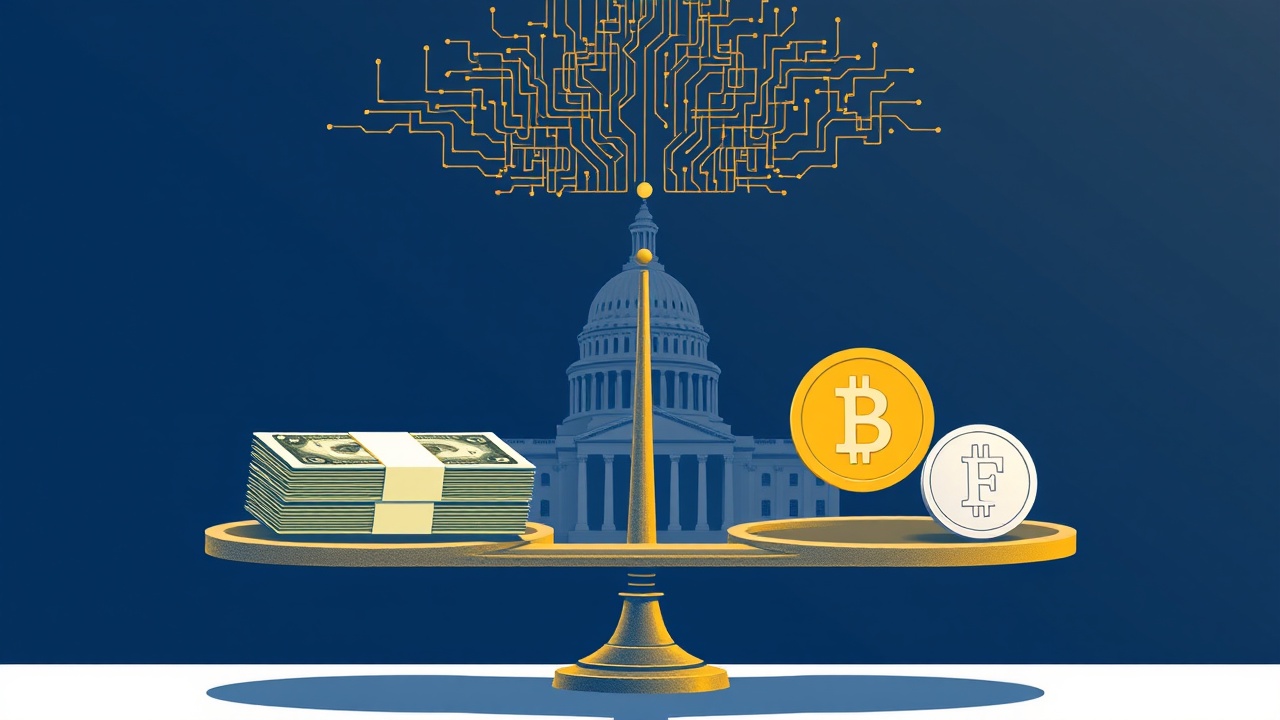
Federal Reserve’s Regulatory Framework for Payment Stablecoins
The Federal Reserve is set to enforce a comprehensive regulatory framework concerning payment stablecoins issued by banks, aiming to ensure stringent backing and management practices. As outlined in the proposed rules under the legislation known as the GENIUS Act, the Fed specifies that each payment stablecoin token must be fully collateralized—meaning that for every dollar of stablecoin issued, there must be an equivalent dollar held in approved reserves. This move seeks to transform stablecoin issuers into entities that adhere to rigorous financial utility standards.
Redemption and Capital Requirements
The proposal, announced on Thursday, mandates that customers must be able to redeem their stablecoins, which are pegged to the U.S. dollar, within a maximum of two business days. In a significant stipulation, should any issuing entity fail to maintain adequate capital reserves, it could face liquidation of its reserves to fulfill its obligations to redeem the tokens, effectively ensuring that all issued stablecoins remain fully backed.
The range of acceptable reserves includes not just U.S. dollars but also allowable assets such as balances held at the Federal Reserve, specific bank deposits, Treasury securities nearing maturity, and qualified investment funds. This provision expands the types of holdings that can underpin stablecoins, promoting greater stability and reliability in the market.
Should an issuer find itself falling short of the one-to-one backing requirement, it is obligated to notify the Federal Reserve promptly. Only if there is a viable plan to restore the required backing in a timely manner can the issuer avoid liquidation. Additionally, capital requirements are structured progressively; issuers face a capital charge of 2% for the first $20 billion in outstanding stablecoins, reducing to 1% for amounts exceeding $50 billion.
Approval Process for Banks
For banks seeking to issue payment stablecoins, the Fed has also laid out processes for requesting approval, involving the submission of detailed business plans and financial forecasts covering the first three years of operations. Thereafter, the Fed will have a 120-day window to approve applications, with the stipulation that failure to respond results in automatic approval of the application. However, any significant amendments to the applicant’s financial condition or business plan could reset this timeline.
Public Input and Consumer Protections
While Fed Governor Michael Barr expresses support for these regulations, emphasizing the necessity of consumer protections and liquidity in the redemption of stablecoins, he acknowledges the importance of public input to clarify the treatment of risks tied to interest rates and foreign currencies. Barr underlined the need for clear rights to redemption for all consumers and expressed his concern regarding the threshold for anti-money laundering deficiencies, which he believes should not be limited to significant or systemic issues before regulatory actions are initiated.
As this regulatory framework develops, comments from the public will be accepted for 60 days following its publication in the Federal Register, marking an essential step in defining the future landscape of stablecoins. This intersection of innovative finance and stringent regulatory oversight illustrates a shift towards integrating advanced financial technologies with traditional banking principles.