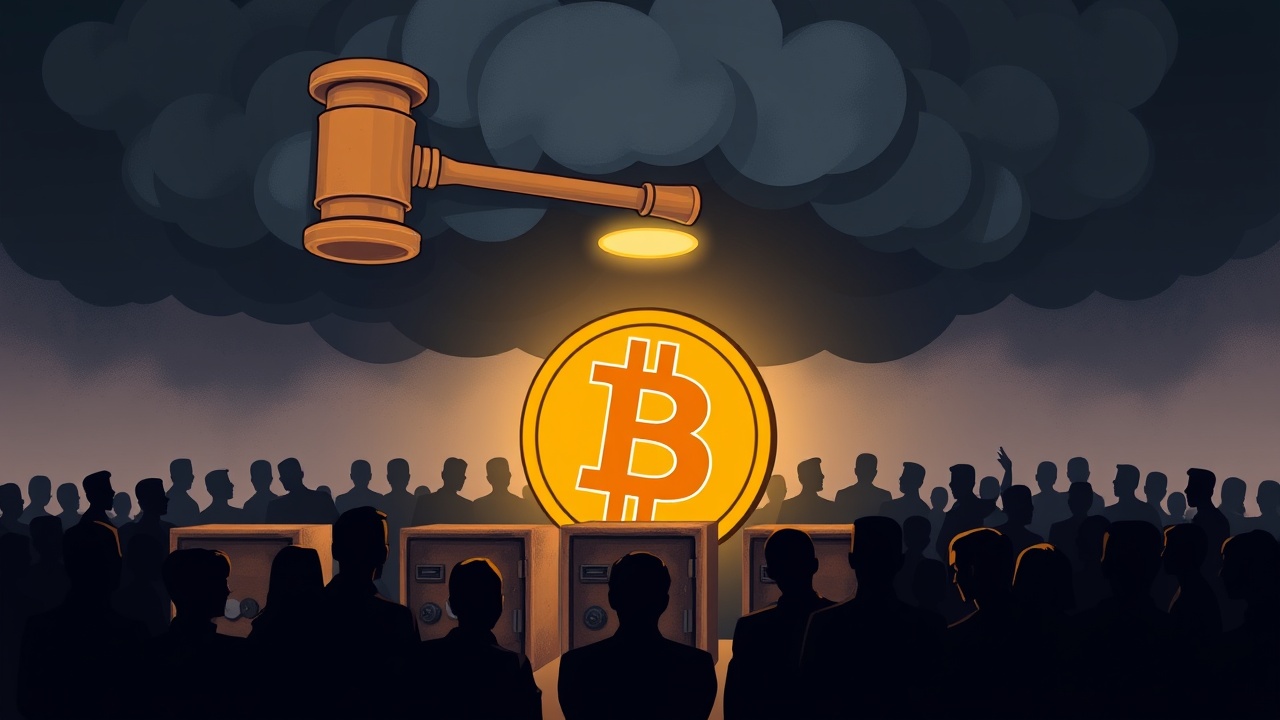
Charles Hoskinson Denounces Lawsuit Over Inactive Bitcoin Wallets
Charles Hoskinson, the founder of Cardano, has publicly denounced a legal action originating in New York that aims to assert ownership over a substantial number of inactive Bitcoin wallets. This lawsuit, initiated by an individual identifying themselves as Noah Doe on May 1, 2026, in the New York State Supreme Court, raises pivotal questions regarding the status of dormant cryptocurrency assets.
Doe is seeking the legal recognition of ownership for 39,069 Bitcoin wallet addresses that have shown no activity for a significant period, reportedly between five to six years.
Complexity of Property Rights in Blockchain
The lawsuit highlights the complexity of property rights in the context of blockchain technology. Doe claims to have utilized an algorithm to pinpoint these unused wallets, which he subsequently reported to the New York Police Department as found property. Referencing Article 7-B of the New York Personal Property Law—which pertains to abandoned and found assets—the complaint notes attempts to notify owners via OP_RETURN messages, a dedicated webpage, and a press release.
Some wallets were subsequently removed from the claim after they exhibited activity, but the remaining addresses did not respond to the notices issued.
Hoskinson’s Reaction
Hoskinson reacted vehemently on social media platform X, expressing his disapproval of the lawsuit’s implications, suggesting it encourages a form of legal exploitation of dormant assets. He remarked sarcastically,
“Hey, you left that cash in your safe too long. I want it!”
and added his disdain for the legal profession with the comment,
“Lawyers continue to be the scum of the earth.”
His outburst reflects broader concerns within the cryptocurrency community regarding the potential classification of inactive wallets as abandoned property similar to unclaimed bank accounts.
Legal and Technical Implications
Crucially, the lawsuit does not assert that the plaintiff possesses the private keys associated with these Bitcoin wallets, meaning that even if a court were to rule in Doe’s favor, the Bitcoin within those wallets could not be accessed without the appropriate cryptographic signatures. This raises significant questions about the enforceability of a court’s decision in the realm of cryptocurrency, where ownership and control are inherently linked to access to private keys.
The core legal debate revolves around whether Bitcoin wallets, which are typically managed by individuals in a decentralized manner, can be deemed abandoned after years of inactivity. This situation is unlike traditional bank accounts, which have established custodial roles and defined pathways for handling dormant assets. Many Bitcoin enthusiasts deliberately keep their holdings in cold storage, untouched for extended periods as a security measure, complicating the notion of abandonment.
Potential Value and Legal Hurdles
Estimates suggest that the wallets in question could contain as much as 3.7 million BTC, currently valued at approximately $285 billion, including addresses associated with prominent figures like Satoshi Nakamoto and entities like the Mt. Gox hacker. Moreover, there are potential legal hurdles concerning the notification process for older wallets, as some may be using outdated script formats which could complicate the validity of the notices sent to their supposed owners.
Current Context and Future Implications
As this case unfolds, it arrives at a time when U.S. lawmakers are increasingly focused on digital asset regulations, ownership rights, and the protocols surrounding custody of cryptocurrencies. Recent discussions have also included the implications of self-custody rights, with advocates suggesting that mere inactivity should not suffice to classify assets as abandoned, contending that many users may prefer to hold their Bitcoin for years without making transactions.
At this juncture, it is important to note that the lawsuit represents a legal assertion, not a final judgment; the court has yet to designate Noah Doe as the legitimate owner of the controversial wallets or the Bitcoin they contain.