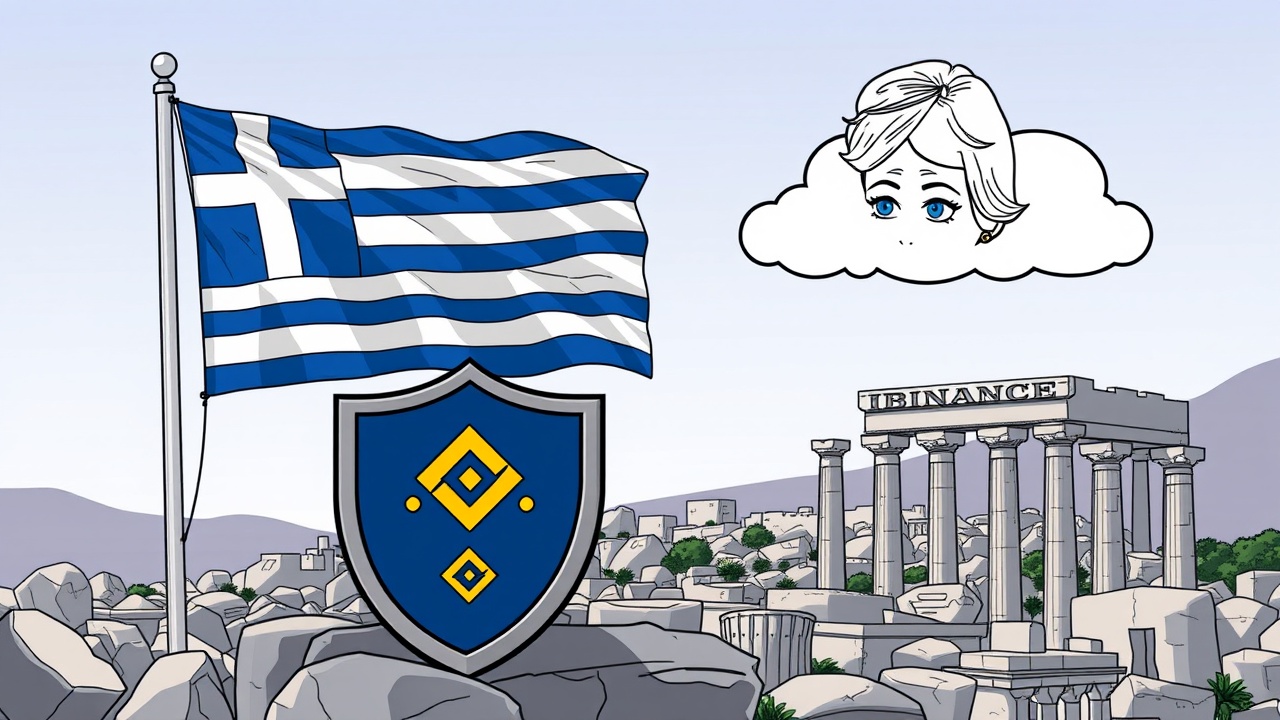
Greece’s Milestone in Crypto Regulation
In a significant milestone for its crypto regulation, Greece has marked its debut in the European Union’s Markets in Crypto-Assets (MiCA) register, listing four local service providers. The updated register, maintained by the European Securities and Markets Authority (ESMA), now includes Greek firms BCash, Xenios Blockchain Group, Capital Wallet Greece, and the prominent Piraeus Bank. This expansion is part of a broader update that has seen the inclusion of six additional providers from countries such as Germany, France, and Slovenia, bringing the total number of registered entities to 359.
Binance’s Withdrawal and Regulatory Dynamics
Previously, the world’s largest cryptocurrency exchange, Binance, was poised to become Greece’s first authorized provider under MiCA, which would have allowed it to operate across the EU through the passporting system. However, Binance withdrew its application on June 24, just prior to the Hellenic Capital Market Commission (HCMC) issuing a decision on its request. A report from the Wall Street Journal recently disclosed that European Central Bank (ECB) President Christine Lagarde had intervened to halt Binance’s application, leading to speculation about political influence over the regulatory process.
Upon inquiry, the HCMC firmly denied that its officials made any statements attributed to them regarding this intervention, stating they had no contact about the matter with Greek government officials including Prime Minister Kyriakos Mitsotakis.
Regulatory Framework in Greece
The distinctions among the regulatory responsibilities for crypto service providers in Greece are evident, with the HCMC overseeing BCash, Xenios Blockchain Group, and Capital Wallet Greece, while Piraeus Bank falls under the supervision of the Bank of Greece. This regulatory framework reflects Greece’s implementation of MiCA, which permits member states to assign multiple competent authorities for overseeing various segments of the crypto market.
Future of Crypto Operations in Greece
Despite these developments, Binance has refrained from officially commenting on the reports of intervention, maintaining its focus on pursuing MiCA authorization in Europe. The ECB also withheld comments on the matter.
As Greece transitions into this new regulatory landscape, the MiCA register’s latest entries signal a significant move in the oversight of digital assets, potentially shaping the future of crypto operations within the region.