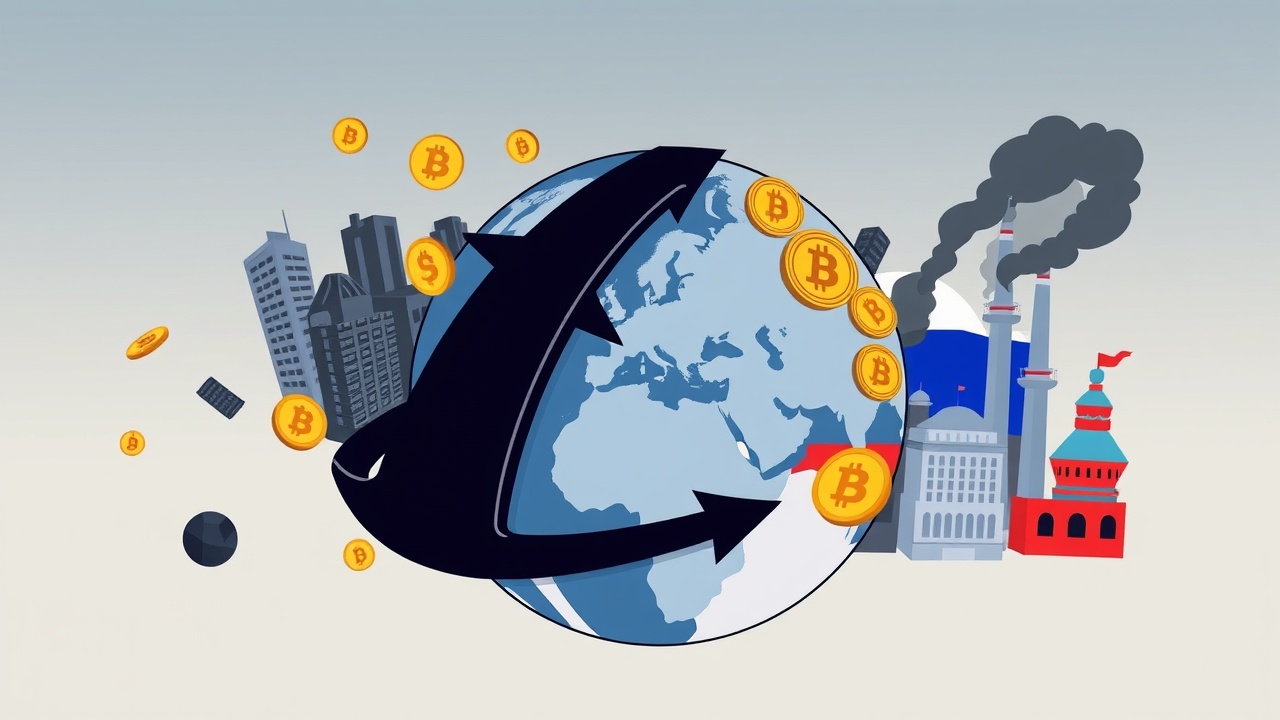
Evolution of Cross-Border Payments in Russia
The landscape of cross-border payments is rapidly evolving, particularly in Russia, as outlined by Stanislav Lazarev, the Deputy General Director for Sales at A7. He notes a significant shift towards independent payment solutions, driven by the increasing number of sanctions imposed by Western nations such as the United States and the European Union. These sanctions have necessitated a transformation within Russia’s payment infrastructure, enabling local companies to better navigate the complexities of a constrained international transactions environment.
Forecast for Payment Systems
Lazarev forecasts that these changes will prompt a fundamental reassessment of the current fiat payment systems within the next two years.
“The share of the ruble in external trade transactions has risen to over 53% among importers, and when combined with currencies from allied nations, the total reaches approximately 85%,”
he stated in an interview with Izvestia. This notable shift suggests a pivot away from conventional systems toward alternative financial practices that may encompass instruments like bills of exchange and various digital assets.
Impact of Sanctions and Digital Tools
He further emphasized that the pressure from western regulatory standards, coupled with the potential for secondary sanctions, will maintain its influence on this transition. Lazarev predicts a complete overhaul of payment methods towards independent and alternative solutions within a one to two-year timeframe. The growth of digital tools, especially stablecoins, is also anticipated during this transition.
A7A5 Stablecoin and Market Position
Currently, A7A5, a ruble-backed stablecoin recognized as a digital financial asset for international settlements, is uniquely positioned in this market.
“Our A7A5 token is the only such stablecoin that has gained this status, enabling cross-border trades efficiently,”
Lazarev asserted.
Established in 2024, A7 has developed partnerships with over 10,000 trading entities, managing nearly 20% of Russia’s international settlement transactions. The A7A5 token, launched by Old Vector on behalf of A7, has reportedly been instrumental in facilitating nearly $100 billion worth of transactions involving entities under sanction. Despite its integration into the payment ecosystem, this stablecoin faces significant challenges, being targeted by sanctions from the U.S. Office of Foreign Assets Control (OFAC) as well as European and UK authorities. Centralized exchanges dealing with A7A5 have also come under scrutiny and attack due to these sanctions.
Ongoing Challenges in the Financial Landscape
Furthermore, the recent sanctions package aimed at Russia is acknowledged as one of the most comprehensive moves focused on cryptocurrency regulation, according to blockchain intelligence agencies, underlining the ongoing complexities in this financial landscape.