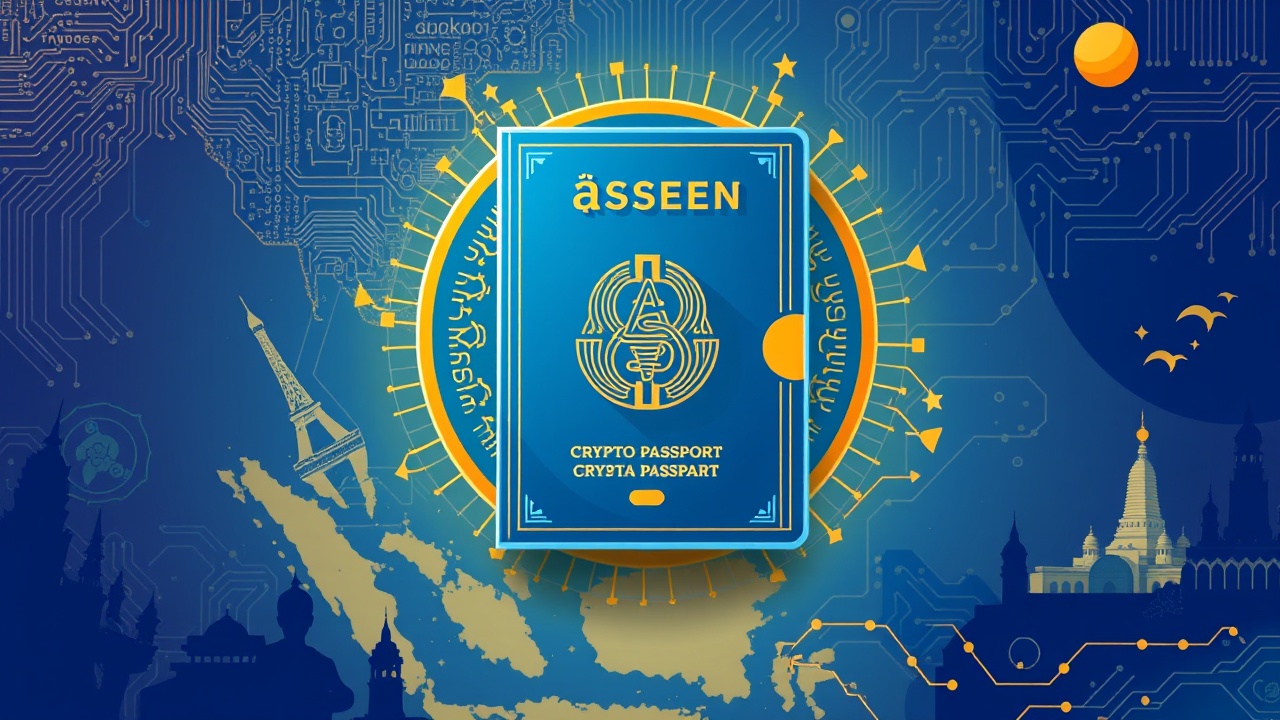
Crypto License Passporting in ASEAN
During a recent fireside chat at the ASEAN Tech Summit held in Manila on July 28, 2026, Changpeng “CZ” Zhao, the co-founder of Binance, expressed his support for a concept referred to as crypto license passporting for the ASEAN region. This innovative idea, initially suggested by Lito Villanueva, the founding chair of the FinTech Alliance PH, advocates for crypto firms that already hold a license in one ASEAN nation to simplify the approval process for operating in other member countries.
Current Regulatory Landscape
Zhao highlighted that the current landscape for cryptocurrency companies in Southeast Asia involves navigating a complex web of individual licensing procedures, compliance mandates, and oversight from various regulatory bodies. He argued that facilitating mutual recognition of license approvals could significantly streamline market entry and reduce duplicated efforts and costs for crypto businesses, including exchanges, custodians, and stablecoin payment providers.
“Facilitating mutual recognition of license approvals could significantly streamline market entry and reduce duplicated efforts and costs for crypto businesses.”
However, it is crucial to clarify that Zhao’s endorsement does not equate to an official policy decision from ASEAN. No specific regulatory body within ASEAN has announced any formal plan for the implementation of crypto passporting, making Zhao’s backing appear more as a vision for future regional cooperation rather than an immediate action.
Challenges in the Current Framework
Binance’s own experiences emphasize the challenges of gaining regulatory approvals across different nations, as the exchange seeks to secure more licenses while adhering to disparate national requirements, reported Reuters in July. Despite some progress in traditional finance with initiatives like the ASEAN Collective Investment Schemes Framework, which simplifies approval procedures for qualifying funds across member states, a similar framework for crypto exchanges or stablecoin issuers is non-existent.
Currently, the various regulatory frameworks within ASEAN lack standardization, with each country applying different laws and classifications to digital assets. This divergence means that crypto firms often face multiple regulatory hurdles when attempting to operate within the region.
Case Study: Philippines
For instance, in the Philippines, companies like Binance and BlockShoals encountered challenges due to the necessity for a central bank license for specific payment services, even while being part of a Securities and Exchange Commission sandbox program. This scenario demonstrates the complex regulatory landscape wherein approvals from multiple agencies are often required.
Need for Regional Dialogue
A successful implementation of a regional passport would necessitate dialogue among ASEAN regulators to determine a lead supervising authority and delineate responsibilities that remain with each local jurisdiction—a task that grips the regional integration efforts.
Comparative Analysis with the EU
In comparison, the European Union’s Markets in Crypto-Assets Regulation (MiCA) provides a more defined template, allowing authorized crypto firms to operate across EU member states post-notification of compliance. This model benefits from a unified legal framework and harmonized authorizations among national regulators, aspects that are currently lacking in ASEAN.
Moreover, while Binance has previously engaged in discussions regarding MiCA, its missed deadline for full compliance exhibits the challenges of regulatory scrutiny and the necessity of thorough regulatory approvals, even in streamlined processes.
Future Prospects
Looking ahead, the forthcoming ASEAN Digital Economy Framework Agreement may offer potential avenues for regional collaboration, with the agreement set for signing in November 2026. However, it remains to be seen whether the specifics surrounding crypto license passporting will be incorporated into this framework, as negotiations are still ongoing and no concrete policy details have yet been made public.
Until further progress is achieved on common minimum standards and effective information-sharing systems, Zhao’s proposal remains a hopeful but unofficial initiative for enhancing crypto regulation across ASEAN.